
No products in the cart.
How to Prevent and Control Damping Off
How to Prevent and Control Damping Off
Damping off is one of the most frustrating problems encountered when raising seedlings. Everything can appear perfectly normal one day, only for a young seedling to collapse, wilt or fall over the next. In some cases, several seedlings in the same tray can be affected within a short period.
Damping off often strikes during the earliest and most vulnerable stages of plant development.
Fortunately, damping off is also a relatively well-understood plant disease. By understanding what causes it, recognising the warning signs and following good hygiene and moisture-management practices, gardeners can substantially reduce the likelihood of losing seedlings.
This guide explains what damping off is, why it occurs, how to distinguish it from other seedling problems and the practical steps that help prevent it.
What is Damping Off?
Damping off is a general term describing several diseases that affect germinating seeds and young seedlings. Rather than being caused by a single organism, damping off can result from different soilborne pathogens that attack developing roots and stems.
The disease typically affects plants during germination or shortly after seedlings emerge.
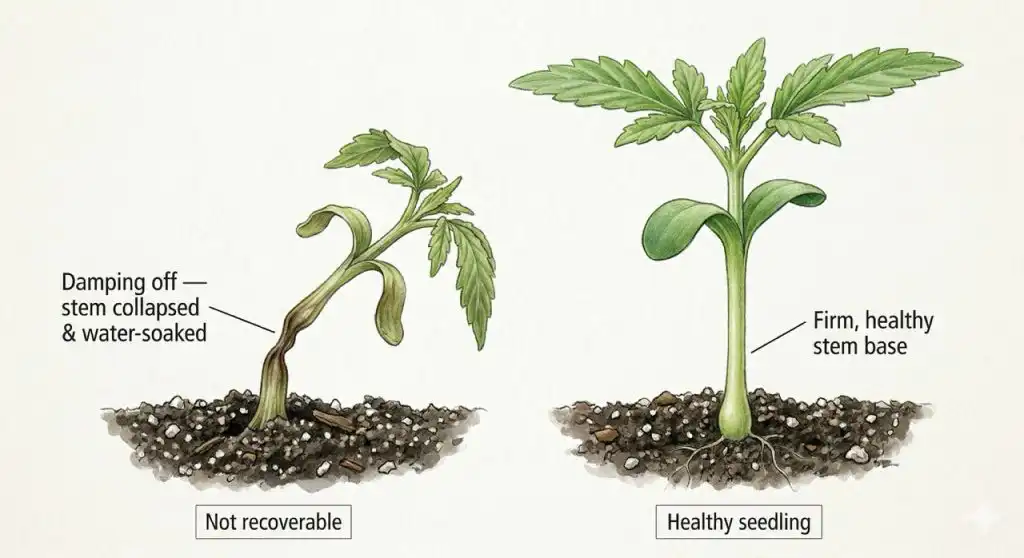
A healthy seedling normally develops a firm stem and an expanding root system. When damping-off pathogens attack, they can damage the delicate tissues responsible for supporting the plant and transporting water. The result may be sudden wilting, stem collapse or complete seedling death.
What Causes Damping off in Seedlings?
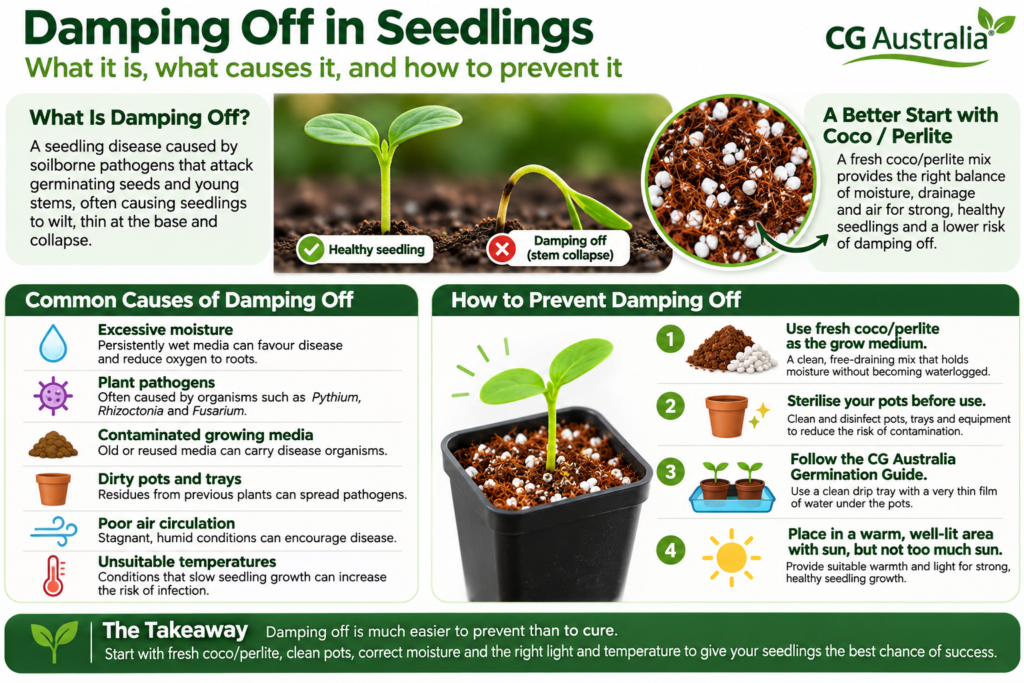
Several factors commonly contribute to damping-off problems.
- Excessive Moisture:
Persistently wet growing media can create conditions favourable to certain damping-off pathogens, particularly water moulds such as Pythium. Excess water can also reduce the amount of oxygen available around developing roots. Roots require oxygen for normal respiration. When growing media remain saturated, root function can deteriorate, leaving seedlings more vulnerable to disease.
- Contaminated Growing Media:
Soil and reused growing media may contain organisms capable of causing seedling disease. Pathogens can persist in plant debris, in0fected roots and contaminated material from previous growing cycles. We recommend coco/perlite as the best method. As coco comes in sterile pre-dehydrated blocks it eliminates many of the potential pitfalls. - Contaminated Pots & Trays:
Reusing containers without cleaning them can transfer plant pathogens between growing cycles. Small amounts of old growing medium, dried roots and organic debris can remain inside pots. These residues may harbour pathogens even when a container appears reasonably clean. - Poor Air Circulation:
Still, humid conditions can slow the drying of wet surfaces and contribute to an environment favorable to some plant diseases. Closely crowded seedlings may also experience reduced air movement around their stems and leaves. Although poor air circulation does not directly cause damping off, it can contribute to unfavourable growing conditions. - Unsuitable Temperature:
Temperature influences both seedling development and the activity of plant pathogens. Some damping-off organisms are more active in cool conditions, while others thrive at warmer temperatures. Cannabis prefers a warmer temperature, so aim for 22-30 degrees Celsius for best results.
Damping Off vs Overwatering: What's the Difference?
Damping off and overwatering are frequently confused because both can produce weak, wilted or collapsing seedlings. The distinction is important.
Overwatering describes a moisture-management problem. Excessively wet growing media can restrict oxygen availability and interfere with normal root function.
Damping off describes disease caused by pathogens attacking germinating seeds, roots or seedling stems.
The two conditions can overlap because persistently wet environments favour some damping-off pathogens. A seedling that wilts in wet growing media is not necessarily infected. Likewise, a seedling affected by damping off may show symptoms even when the surface of the growing medium appears relatively dry. A narrowed, discoloured or rotting stem base is more suggestive of damping off than simple overwatering. When the cause is uncertain, examining the stem and roots can provide useful clues.
FAQ - Damping Off in Cannabis Seedlings
Damping off is caused by plant pathogens, commonly including Pythium, Rhizoctonia and Fusarium. Moisture, temperature, growing-medium conditions and hygiene can influence how readily disease develops.
Not directly. Damping off is a disease caused by pathogens. However, excessive moisture can encourage certain pathogens and weaken root health, increasing the likelihood of problems.
Yes. Some damping-off pathogens can spread through contaminated growing media, water, equipment and plant debris. The method of spread depends on the organism involved.
A seedling with severe stem rot or collapse is unlikely to recover. Mild symptoms may be confused with other forms of stress, so accurate identification is important.
Cinnamon is sometimes promoted as a natural antifungal treatment, but evidence supporting household cinnamon as a reliable damping-off control is limited. It should not replace established disease-prevention practices.
Hydrogen peroxide has antimicrobial properties, but its effectiveness depends on the formulation, concentration, organism and application. Improper use can damage living plant tissue. It should not be regarded as a universal treatment.
Yes. Damping-off pathogens can occur in many growing systems, including those using coconut coir. Using fresh, good-quality material may reduce contamination risks, but it does not guarantee disease prevention. In our experience using coco from a fresh dried block is normally fool proof.
Not exactly. Damping off generally refers to diseases affecting germinating seeds and young seedlings. Root rot is a broader description of root deterioration that can affect plants at different growth stages. Some pathogens are associated with both conditions.

About the author:
As a passionate gardener and advocate for self sufficiency and food security, CG aims for moderation and reverence of Cannabis as an ancient and powerful natural medicine. As the taboo steadily lifts worldwide, we’re here to help responsible, law abiding adults to experience the joy and wonder of nurturing a tiny seed from humble germination to bountiful harvest.